
GYUHO Lee © 2026
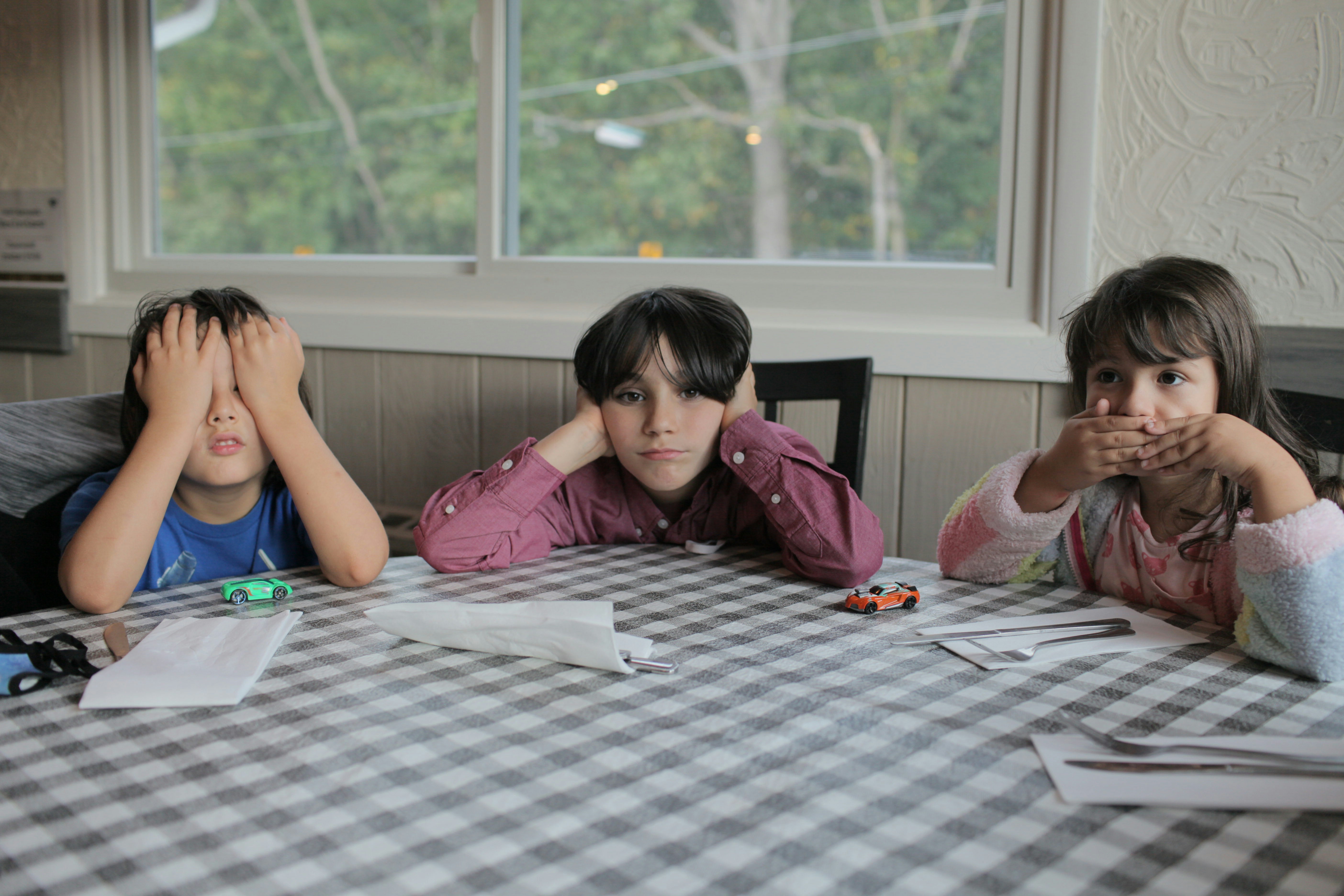
Jimmy (8) : "I can read. I just can't sit."
NOODING
Timeline
Apr 2023 - Oct 2023
TEAM
Gyuho Lee
Gayoung Moon
Gayoung Lee
MY ROLE
Lead Designer
UX Research
Concept Development
3D Prototyping
CMF Direction
Fabrication
Jimmy’s not the only one. Most of the kids we observed couldn’t sit still long enough to read. They moved, climbed, and turned furniture into playgrounds. NOODING is a reading nook designed around how children actually move, developed through a six-month study.

Why We Started
Reading environments have improved over generations. Better libraries, more books, more access. Yet children are reading less than ever. The problem wasn’t availability. It was the space itself.
We spent 6 months researching how children actually behave in reading environments, and translated those findings into a furniture concept that works with their instincts, not against them.
20+ kids, 2 environments. Zero straight answers.
Children don’t interview well. Ask a direct question and you get “I don’t know,” or worse, the answer they think you want. Surveys had their limits, especially with younger kids. So we treated them as a first signal and checked it against what we observed.
We shifted from asking to watching.
Observation took priority over interviews, while contextual parent sessions filled in what the kids couldn’t articulate.
1° DISCOVERy
90% Said No.
We asked the children this question,
“Have you ever felt that reading can be Enjoyable?”
Watch More,
Ask Less
UX Research
Problem Space
Core Issue
Insight (Spoiler: kids don’t read, they play)
At a Glance
Let the Numbers Talk
We surveyed 20 children. The answers weren’t surprising. The numbers were.
90%
dislike reading
70%
of children did not visit the library recently
65%
read zero books in a typical month
↑6.5 hrs
children’s average daily screen time
↓15 min
children’s average daily ‘paper book’ reading time
Behind the Numbers
Numbers tell us what. Research tells us why.
Primary Research
Qualitative & Quantitative Data
Interviews and surveys covering reading habits, preferences, average reading time, and on-site library observation.
Secondary Research
Desk Research
We cross-referenced findings with expert theories on cognitive development by age to define the right target group and scale.
The Evidence
What the Data Says about Reading
Reading habits, screen time, library use. Across all three, the same pattern held: books lost to everything else, every time.
Problem Space
Why Kids Don't Read
What we observed
01. Fading Reading Habits
Children spend less time with books. Static text struggles against more stimulating daily distractions.
02. Restless by Design
Conventional furniture doesn’t accommodate children’s natural movement. One-directional seating that discourages posture changes makes the space feel restrictive from the start.
03. Visual Over Static
Children used to dynamic digital media find static books harder to engage with. Without interaction, reading starts to feel like a chore.
These point to a structural problem in the furniture and spaces themselves.
Core Issue
Structural Limitation
The data pointed to a pattern. Spaces and furniture designed for reading weren’t designed around the people reading in them.
Findings Sprint
Two issues kept surfacing
Physical and sensory needs ignored
Environments built for adults, not children
➜ Children need spaces that move with them, not against them.
insight
Understanding the Real Needs
From Data
to Empathy
Data showed what was happening.
We needed to understand why. So we went directly to children, parents, and experts to find out.
We asked:
How do children actually use furniture day to day?
What makes a reading environment work, or fail?
When and why do children turn away from books?
What shapes a child’s focus and comfort while reading?
↓ To find out, we ran three research sessions.
Field observation
Two local children’s libraries
Children were observed across two library visits.
Key patterns from 2–3 hour sessions:
Restless by nature
Children changed seats or posture every 2–5 minutes, and switched books or locations within 10 minutes.
Drawn to shelves, not chairs
They stayed longest near bookshelves where they could browse independently. Open chairs went largely unused.
Furniture as playground
They climbed, pushed, and pulled the furniture. Everything was treated as a play object.
Space needs to earn their attention
In wide, open areas, children scattered and lost focus. Smaller, defined zones held them longer.
5 Parents,
5 Truths.
1:1 interviews with 5 parents
Minimal, open layout at home
Parents preferred simple, spacious setups, but children still gravitated toward tucked-away corners.
Playful and free
Children engaged most in spaces that felt loose and unstructured, not curated.
DIY solutions
Most parents had tried rearranging or adding soft elements to create a cozier reading corner.
Stability matters
When choosing furniture, parents prioritized sturdy structure that supports upright posture.
Hard to focus, hard to stay
The most common complaint: children couldn’t sit still long enough to read consistently.
3 Experts,
1 Conclusion.


2° Direction
From Insight to Design Principles
Every principle here came from what we observed and heard directly. Patterns that kept appearing until they were too consistent to ignore.
01
Ages 4 to 10
Habits form early. Every decision, scale, posture, and material, had to work for a developing body, not a scaled-down adult one.
02
Flexible by design
Children rarely stay in one position for long. The seating had to accommodate shifting, leaning, and curling up without feeling unstable or restrictive.
03
Following natural behavior
Kids treat furniture like play objects. We worked with that tendency, not against it.
04
Adaptable across environments
No two spaces are the same. The design had to work without requiring a dedicated room.
05
Shelf, seat, and space as one
These elements rarely work together in existing furniture. Our goal was to merge them into one coherent object that made sense the moment a child saw it.
Design Concept
What exactly does a product that merges furniture and space actually mean?
Should we create a chair without a seat, or one as large as a wall?
The answer was already there in how children naturally claim a space.
A corner.
A gap between shelves.
A spot just small enough to feel theirs.
That’s when we landed on the Reading Nook.
What's a Reading Nook?
One object. Three functions.
A compact space that gives children a sense of ownership without requiring a dedicated room. Small enough to feel safe, open enough to avoid feeling trapped.
What's a Reading Nook?

What's a Reading Nook?
Body support, book storage, defined space.
By combining them, we removed the friction between wanting to read and actually starting.
Sized to
the child
Seat height - 350mm
Set to a seated hip height of 30–35cm, so feet stay flat on the floor.
Frame - 900 × 712mm
Set through preference tests with the target age group, until the space felt owned, not oversized.
3° Making It Real


UP CLOSE
One object doing three jobs:
seat, shelf, and a space of its own.

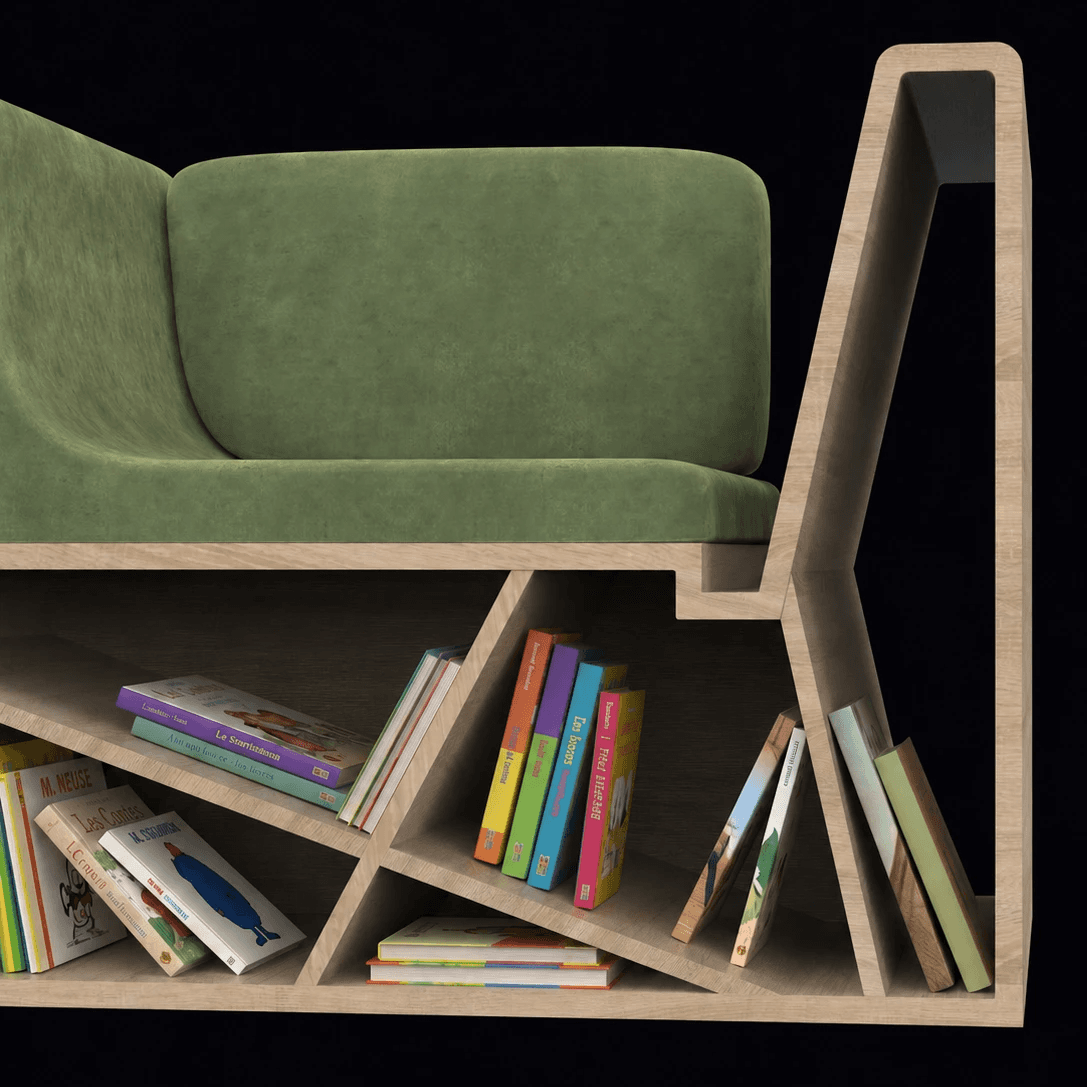
Storage isn’t attached to the chair. It is the chair.
Raised sides, open front.
The hard part was knowing when
to stop enclosing it.

What We Chose and Why
Colors
Green reduces visual noise and supports sustained focus.
Chosen to help children stay calm and engaged while reading.
Texture
Woven cotton upholstery. Smooth with subtle texture.
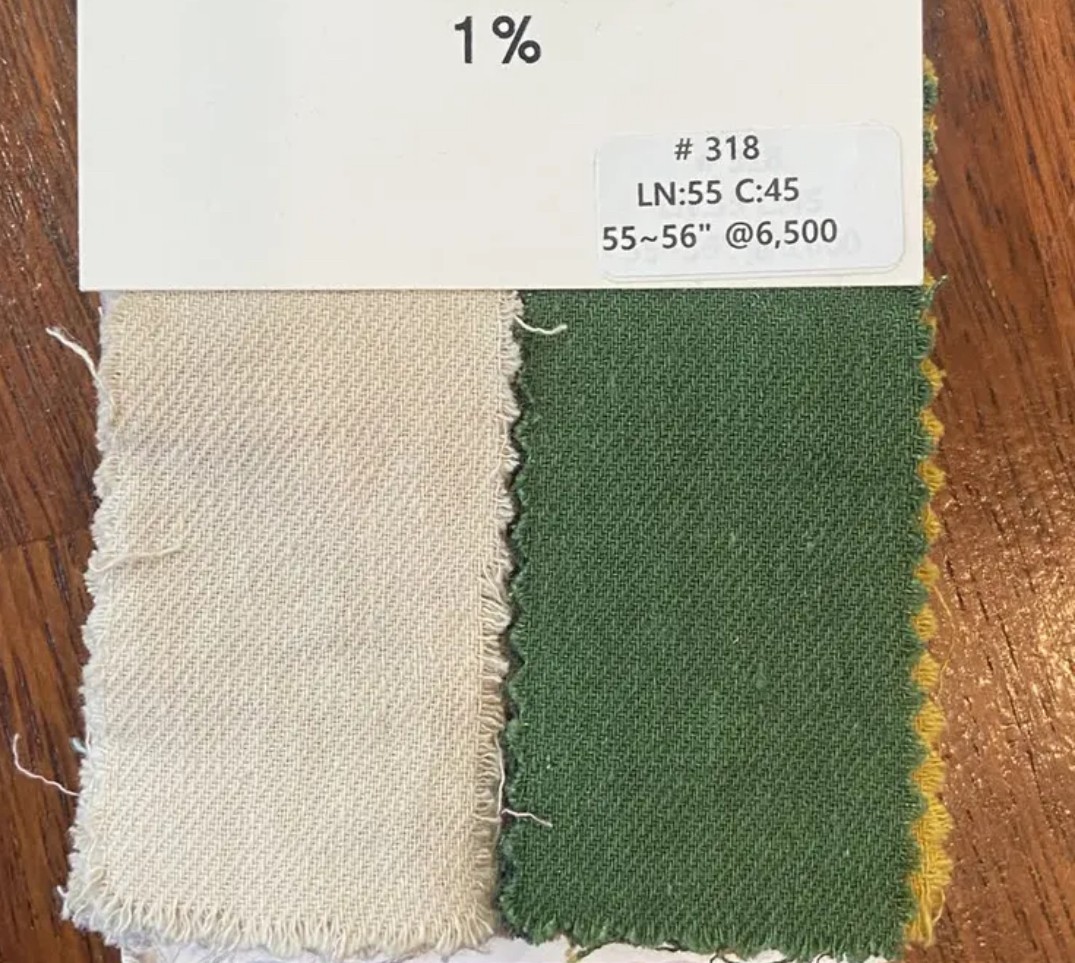
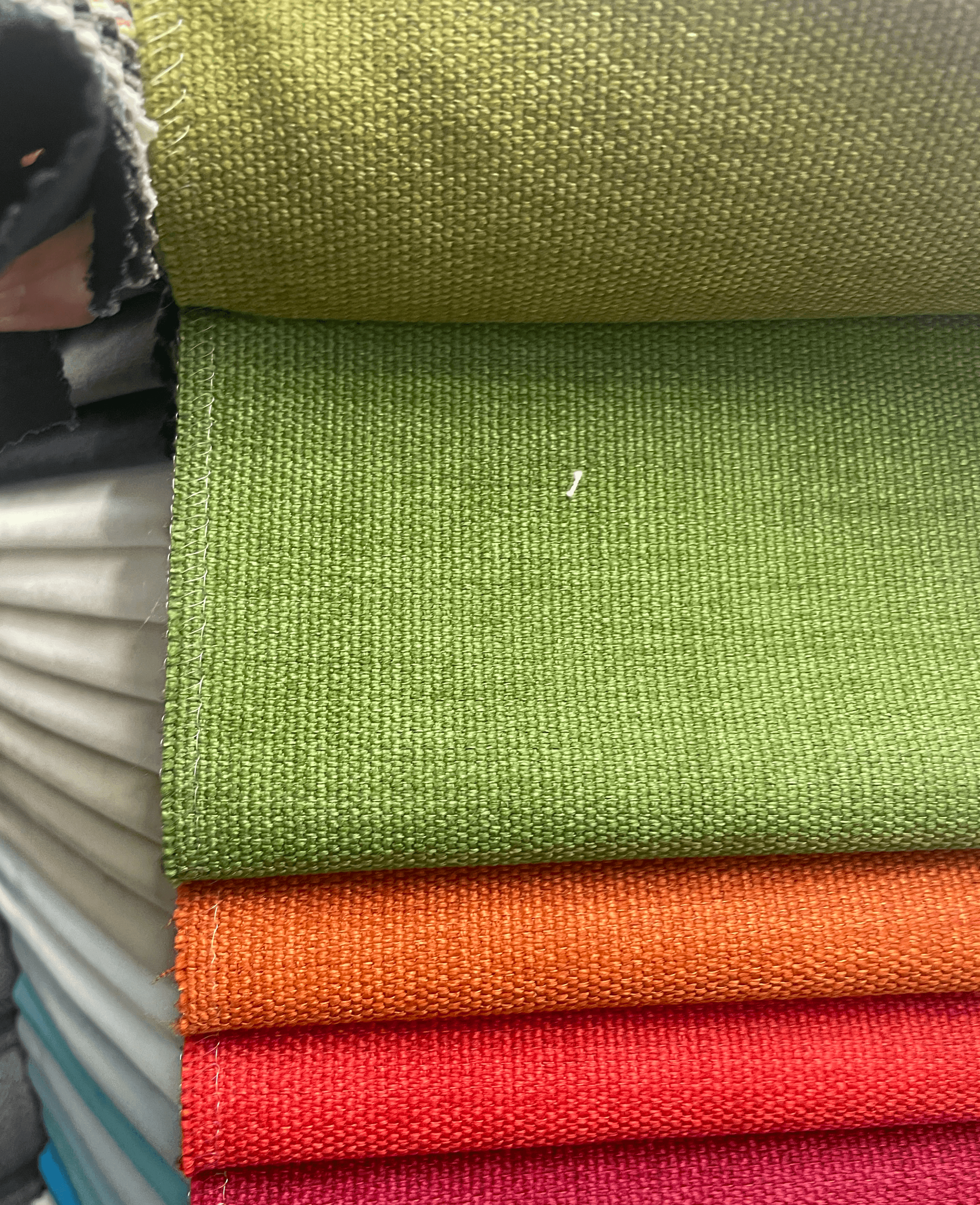
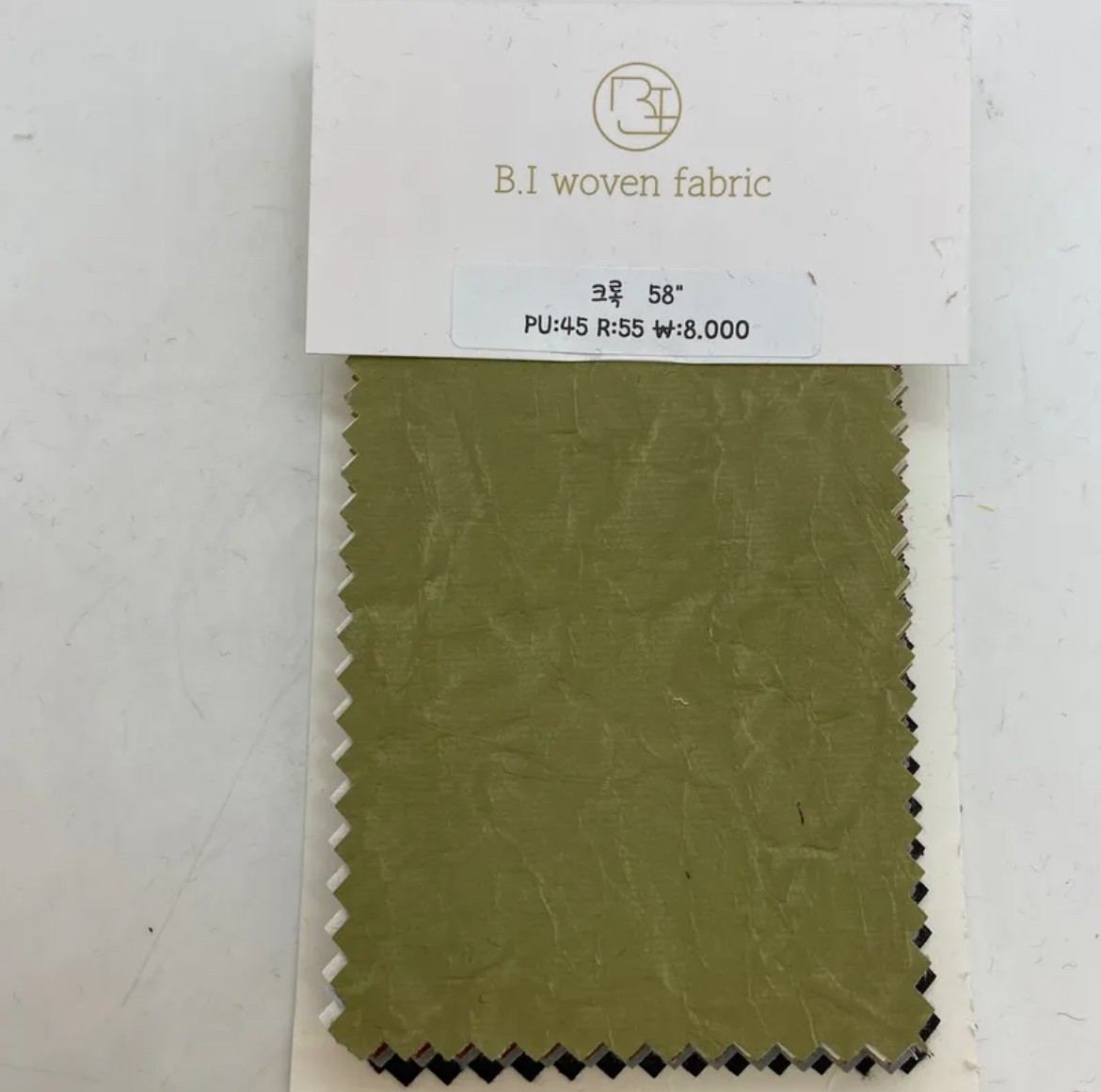
Handpicked at Dongdaemun, Seoul.
Base Material
Wood brings psychological warmth to a space.
For children’s furniture, that matters as much as durability.

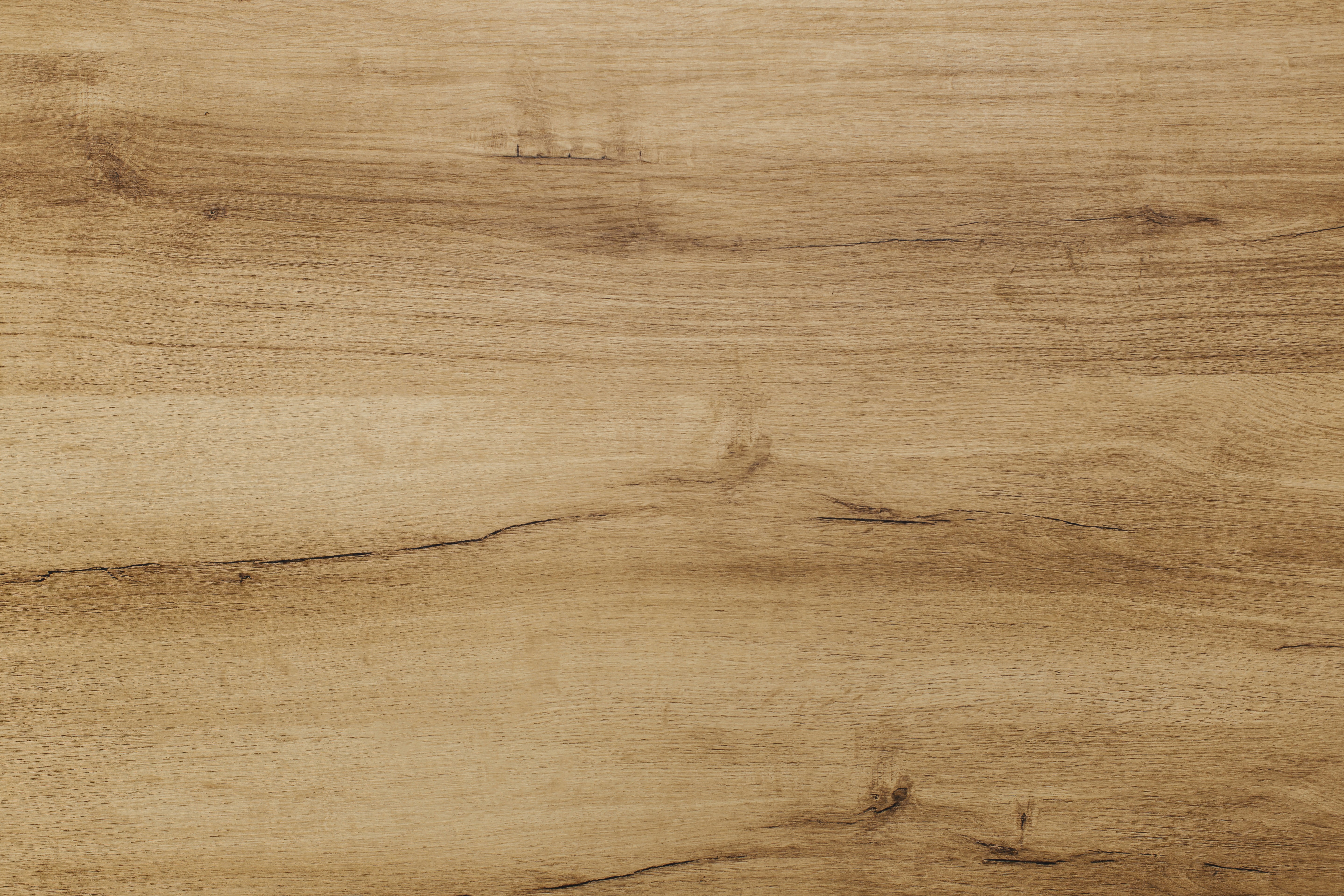
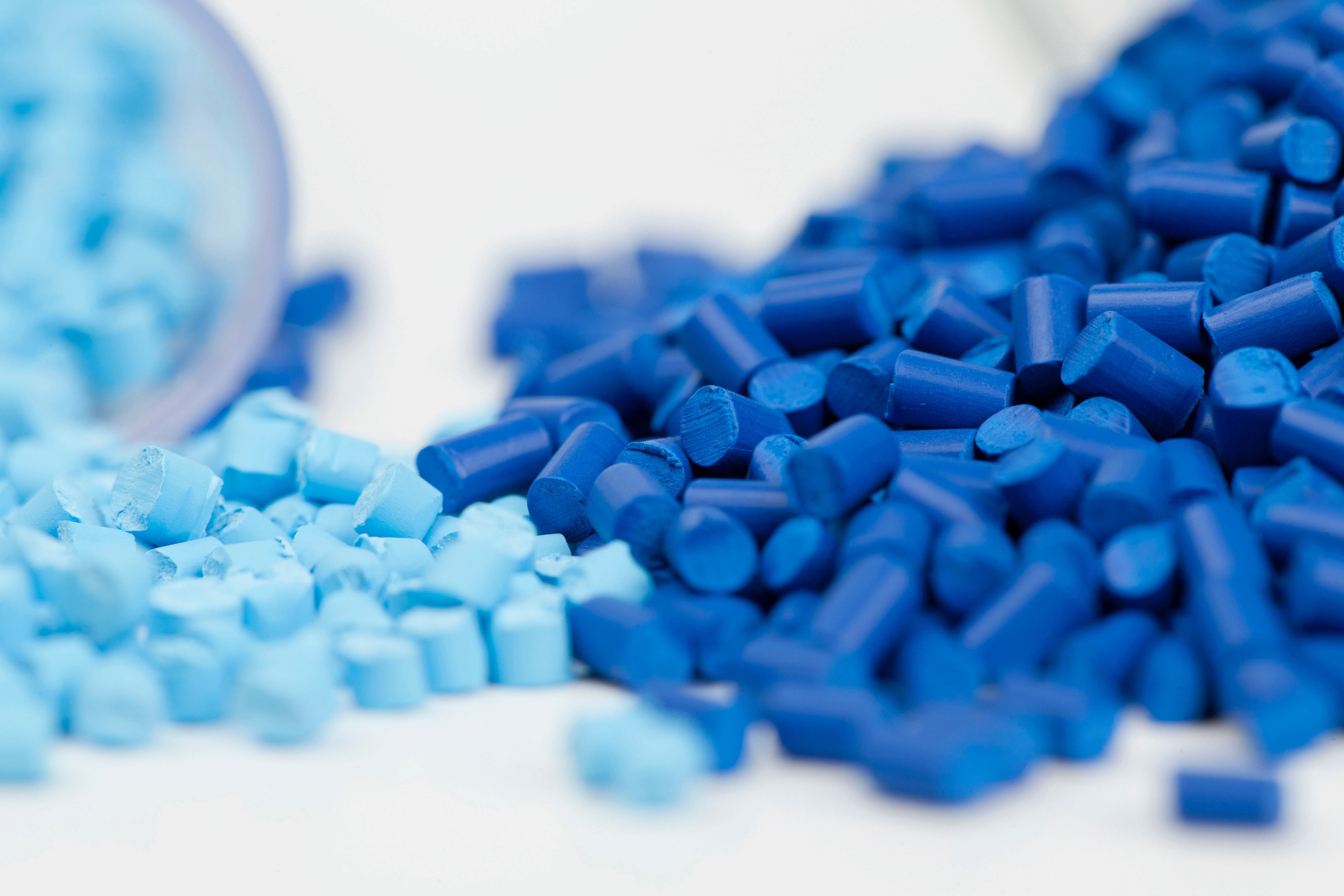
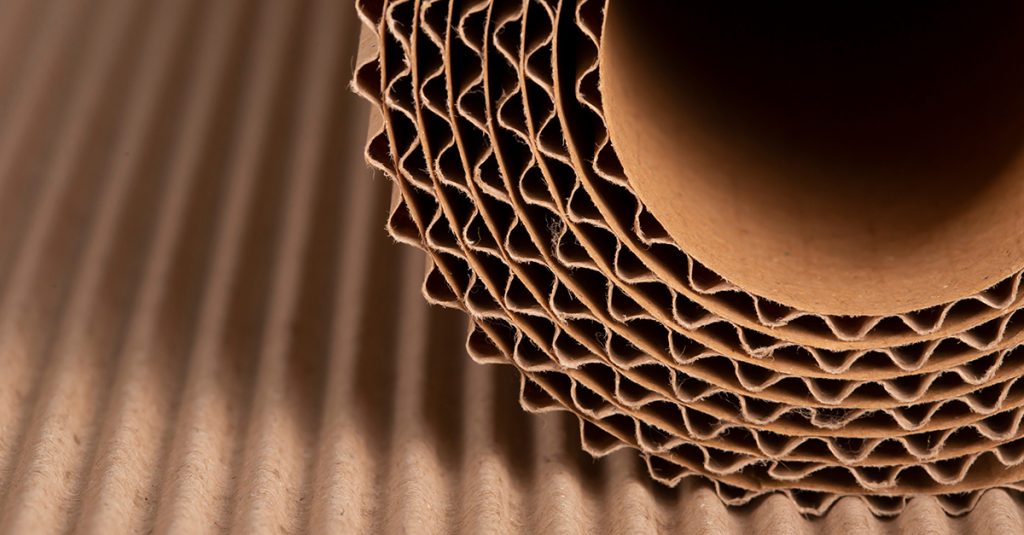
Wood Selection
Affordable, warp-resistant, and easy to work with.
Three candidates, one direction.
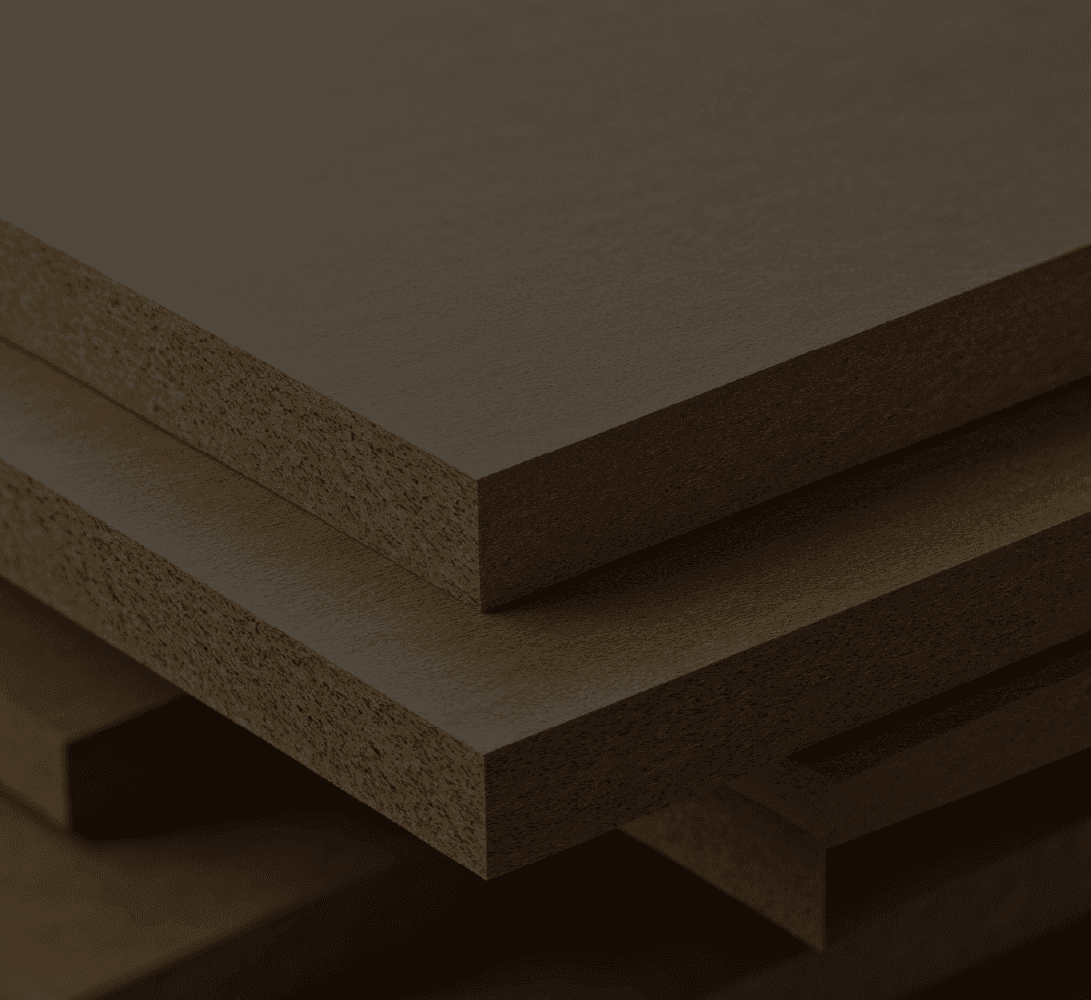
MDF

Birch Butcher Block
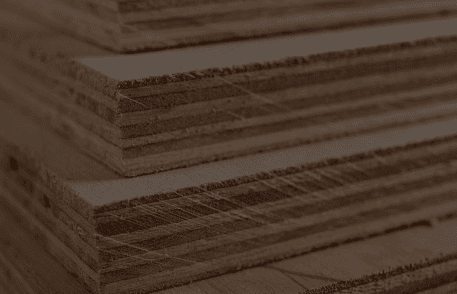
Plywood


FEATURES & SPECS
Structure
Modular wooden frame with integrated storage.
Function
Lower storage designed like a bookshelf for easy access.
Comfort
L-shaped cushioning for flexible sitting postures.
Width
900 mm
Depth
690 mm
Height
712 mm
Seat Height
350 mm
4° The Results
Here's what we
built, showed,
and learned.
BUILT
Three Decide, One Builds

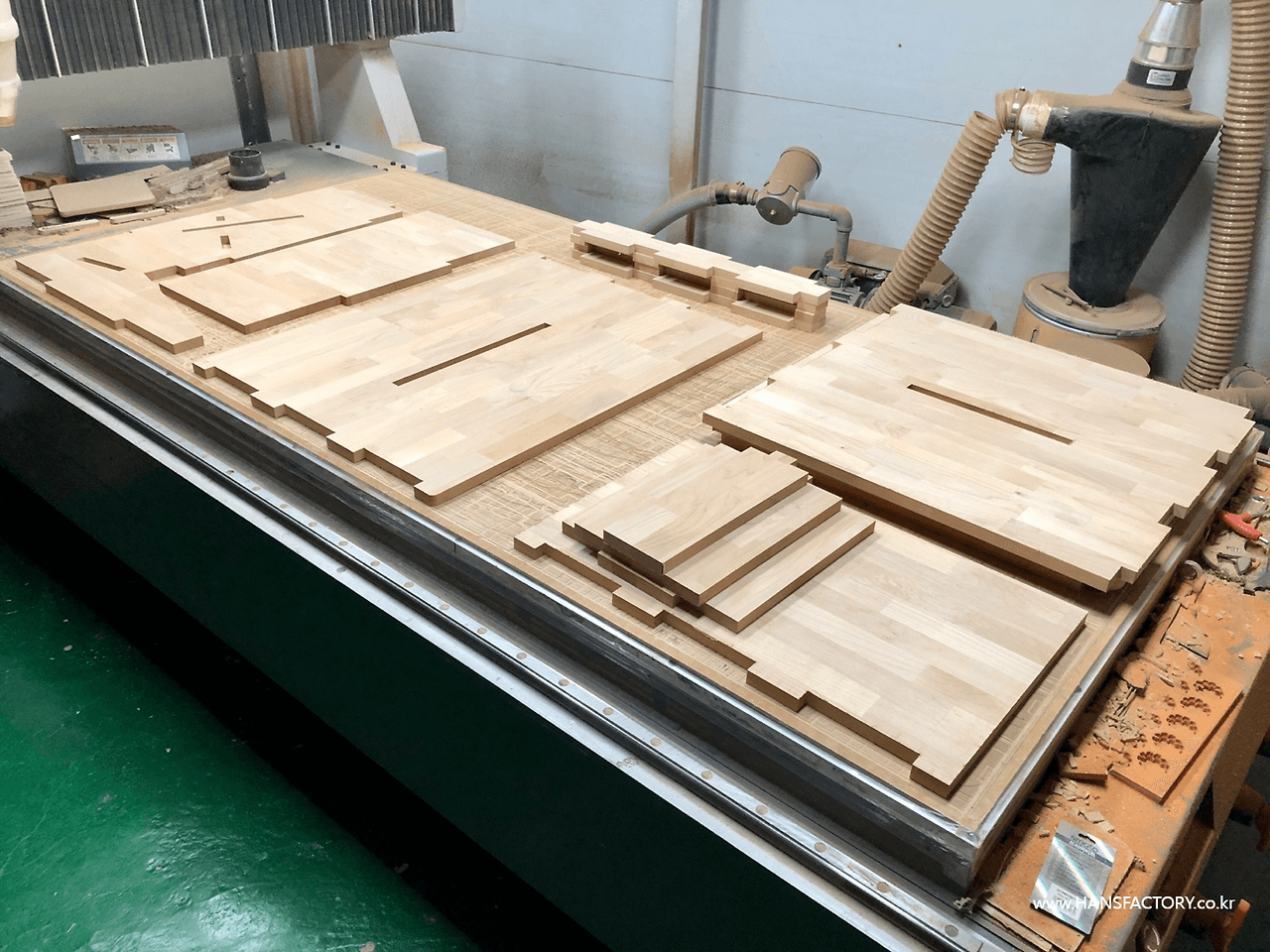

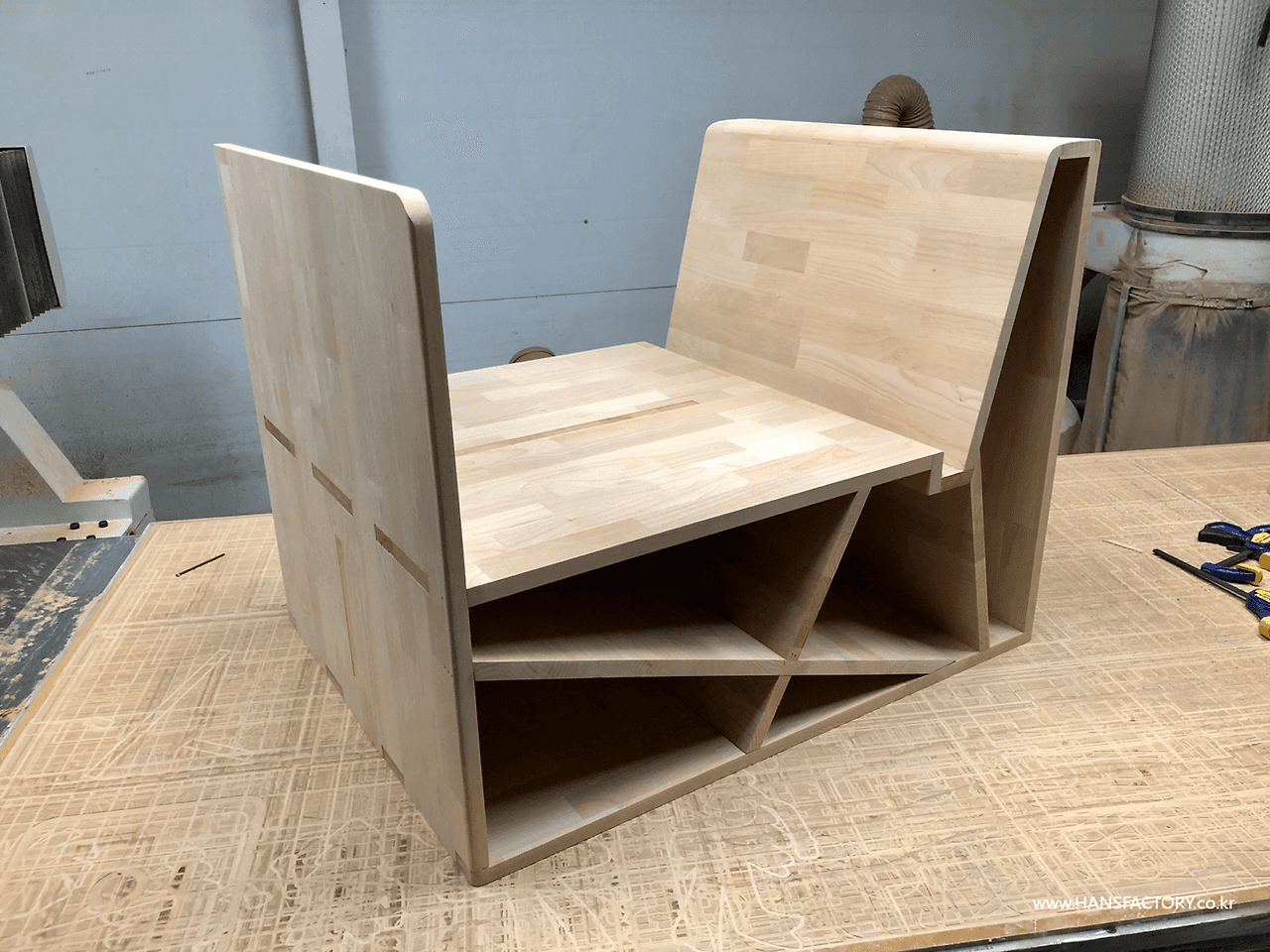
Three designers, one craftsman. We handled the decisions; he handled the precision. Weight distribution, structural tolerances, the cuts that actually had to hold, that was his domain.
That split worked. We moved fast on dimensions, scale, and materials without second-guessing the build, and wrapped the full cycle from research to prototype within 6 months.
Cut, Layered, Covered


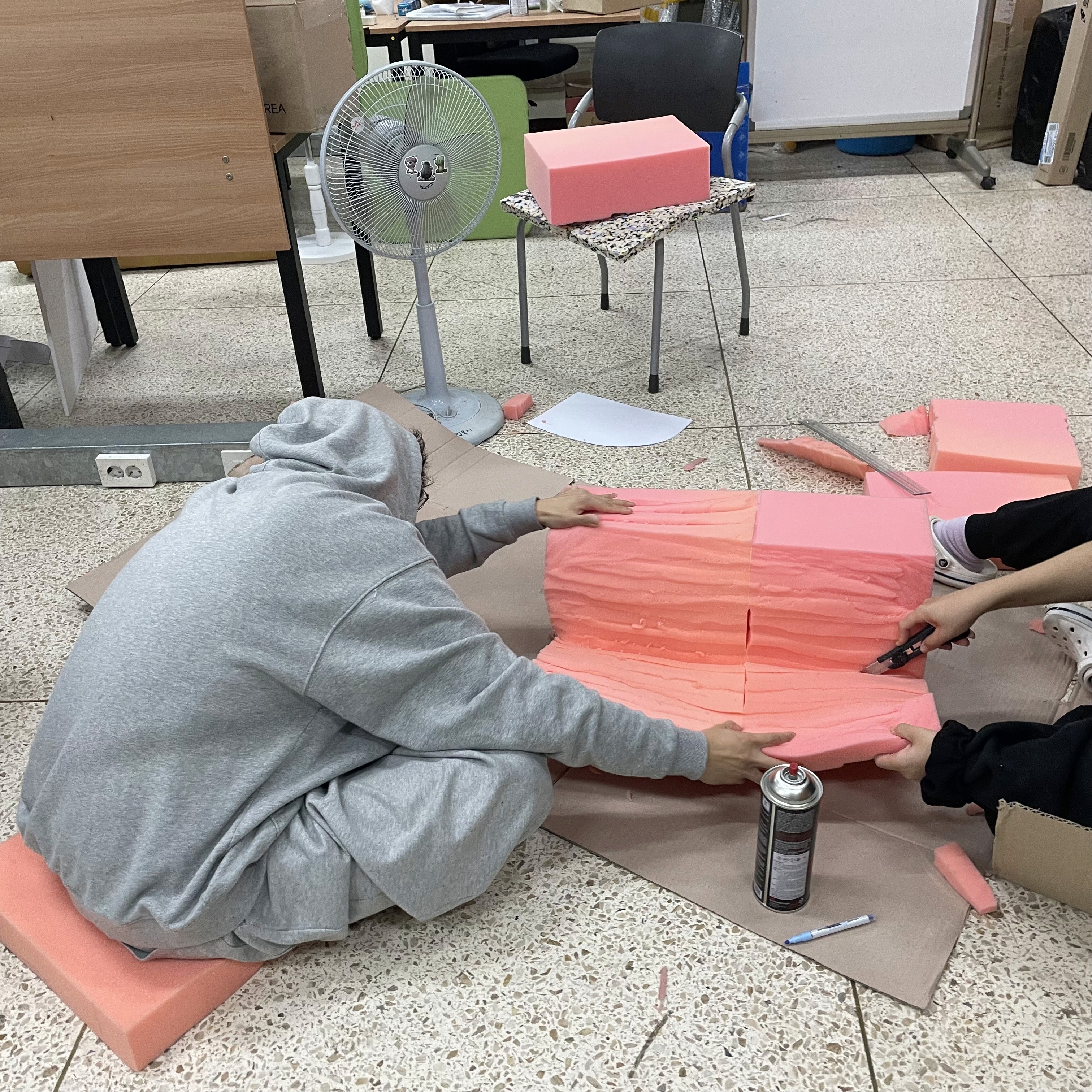

Three tries. Flip to see why.
The cushion wasn’t ordered. It was made. We printed a full-scale template, cut two different foam densities, and bonded them together to get the right feel. The fabric was sourced by hand, shops visited, samples tested, one direction chosen.
Two prototypes didn’t make it. The third one did.
Touch Every Corner

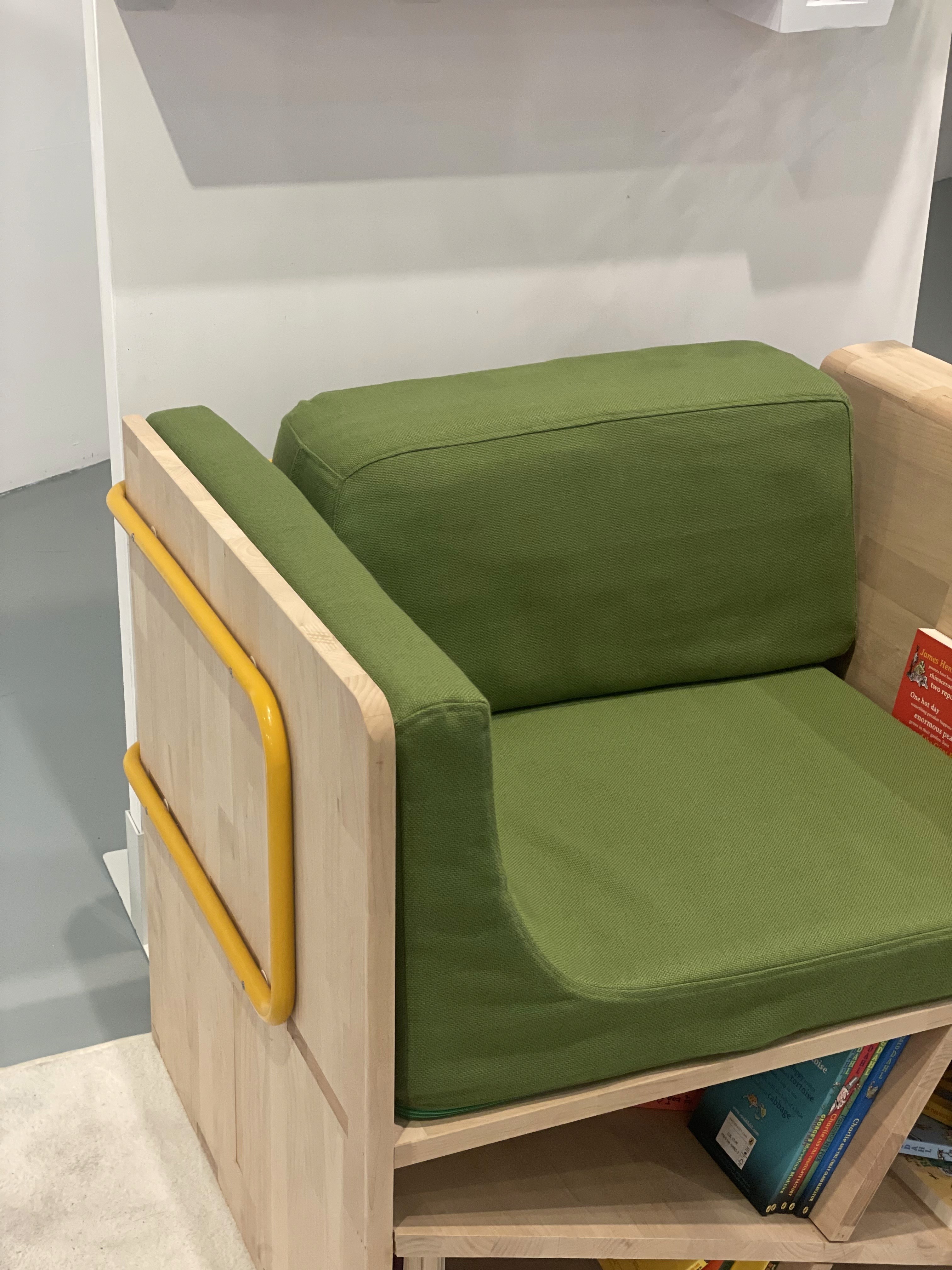


Every angle, up close.
Six months of decisions, compressed into one object. Every joint, angle, and cushion started as a guess and got refined until it stopped feeling like one. This is what that process left behind.
SHOWN
Pitch Day!

The conversation went deeper than we expected. Material choices, structural complexity, production feasibility. Real questions, real answers.
“Perfect for my kid. Where can I get one?” (laughs)
— Judge, Campus Startup Competition
The Room Responded


NOODING was the only piece in the exhibition you could actually sit in.
Kids did, and a few waited their turn.
Four professors gave it an A+, the top mark in our cohort.

Built in Pieces, Praised as One
Transported in parts, assembled on-site. It held together. So did the reaction.
(Huge thanks.)
LEARNED
"
Not Bad for Cardboard.
A+ from all four professors. Finalist, Pin-Up Concept Design Award, KAID, 2023. Not a bad result for three people, six months, and a lot of cardboard.
NOODING didn’t make it to production. I still wish it had.
You’ve found me,
exhausted in the clubroom.

"NEXT ARCHIVE"
DIRUNI
ADVAISOR
